President Lundeen Addresses Women’s Leadership at League of Women Voters Event
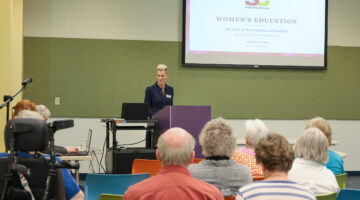
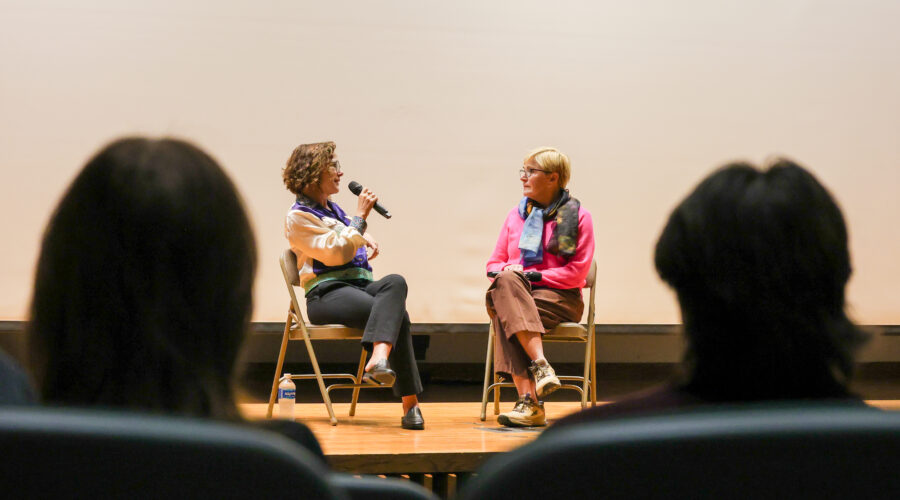
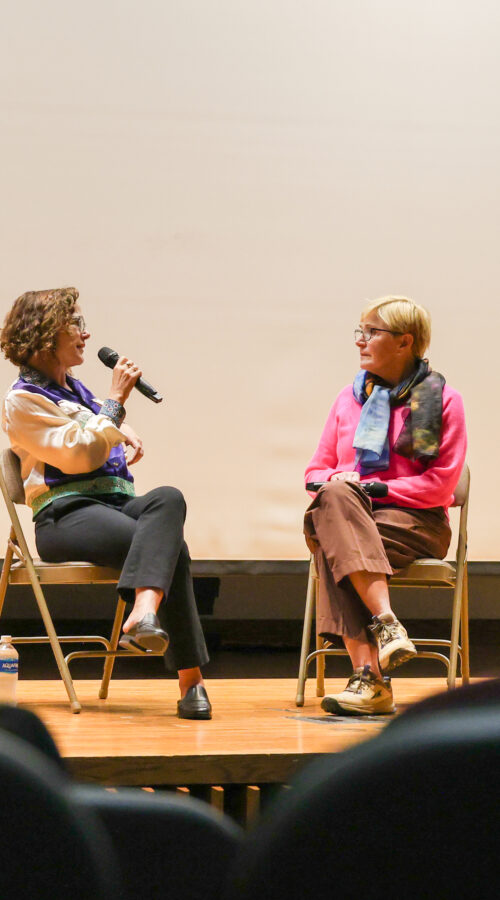
Stephens College President Dr. Shannon Lundeen led a discussion on the vital role of women’s education in shaping leadership and the future of higher education at the League of Women Voters-Columbia/Boone County Learn and Lunch. The event gathered community members at the Daniel Boone Regional Library on Wednesday, May 13.
The presentation highlighted both the progress women have made in educational and professional spaces and the barriers that remain. While discussing challenges women continue to face, Lundeen also highlighted the role Stephens College plays in helping combat some of those issues.
“It was incredibly meaningful,” Lundeen said about being invited to speak at the event. “The League of Women Voters has such a strong history of civic engagement and advocacy, so being invited to speak about women’s education and leadership with a Stephens focus felt especially fitting.”
The Value of Women-Centered Education
Lundeen emphasized that a women’s college provides a unique environment where students gain essential leadership experience. At Stephens, every leadership opportunity goes to a woman, preparing them for success after graduation.
Lundeen discussed the ways women-centered classrooms encourage students to participate more actively in discussions, research and collaboration. She noted that smaller class sizes and supportive peer environments can help students feel more comfortable speaking up and engaging deeply in their education, particularly in areas that may otherwise be a male-dominated field.
Highlighting the Stephens Experience
In addition to discussing women’s education broadly, Lundeen shared information about Stephens College’s academic structure, experiential learning opportunities and career readiness initiatives.
She highlighted the College’s block schedule model, explaining how predictable and manageable class schedules can help students balance outside responsibilities such as work, caregiving and parenting while continuing their education.
Lundeen also spoke about Stephens’ emphasis on experiential learning and career integration beginning during a student’s first year on campus. She explained that hands-on learning opportunities are built directly into the student experience to help prepare graduates for professional success.
The presentation also touched on Stephens’ future goals and strategic planning efforts, including strengthening the College’s mission, expanding industry partnerships, investing in infrastructure, increasing student belonging and positioning the institution for long-term sustainability and impact.
Community Engagement and Future Partnerships
Following the presentation, Lundeen opened the floor for audience questions during a discussion that was also livestreamed online. She reflected on the strong support Stephens continues to receive from the Columbia community and emphasized the importance of maintaining and growing those relationships.
“I hope attendees left with a renewed understanding that education is still one of the most powerful ways to expand what is possible in a person’s life,” Lundeen said. “I also hope they saw that institutions like Stephens continue to play a critical role in developing confidence, leadership, critical thinking and professional readiness for students today.”
Sharon Schneeberger said attendees were eager to learn more about the College and its future.
“I think people were really interested to learn more about what Stephens College is doing right now, and we want to support it, and we want students to remain in our community,” Schneeberger said.
Schneeberger also emphasized the importance of continuing conversations surrounding women’s education and leadership.
“It just helps people focus on it and think about it,” Schneeberger said. “We get so involved in our busy lives that we stop to think about what it means, what women’s education really means to our world.”
She added that she hopes events like this continue to strengthen partnerships between Stephens and The League.
“Oh sure, we’ve done several things in the past, and we are always willing to work with college-aged students because they are our potential voters,” Schneeberger said.