Biology
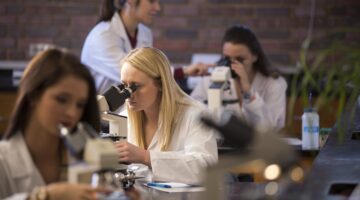
Curious about how life works? Want a degree that keeps your options open?
The Bachelor of Science in Biology at Stephens College is a hands-on program designed for students who want real experience and real outcomes.
This flexible biology degree builds a strong foundation in the life sciences while letting you tailor your path—whether you’re interested in pre-med, pre-vet, research, allied health, or graduate school. From your first year, you’ll learn science by doing science.
Hands-On. Research-Focused. Future-Ready.
This biology major is built for students who want more than lectures and labs on autopilot.
- Learn through experiential and project-based coursework
- Build critical thinking and problem-solving skills employers and grad schools value
- Combine lecture and lab in focused block-schedule courses
- Work closely with faculty who support your goals
You won’t wait until senior year to get involved—research and real-world experience start early.
Pre-Med & Pre-Vet Pathways
Thinking about medical school or veterinary school? Stephens’ Biology major offers clear pre-med and pre-vet emphasis areas designed to help you stay on track and stand out.
- Complete required coursework for medical or veterinary school
- Get advising tailored to health and science careers
- Build experience through labs, research, and internships
- Prepare for graduate exams and competitive applications
- Explore pathways into medicine, veterinary medicine, and allied health professions
With small classes, close faculty mentorship, and early access to research, you’ll graduate prepared, confident, and competitive.
Research Starts Here
At Stephens, undergraduate research isn’t optional—it’s part of the culture.
- Research opportunities throughout the academic year
- Paid and mentored projects through the Summer Research Program
- Support through Women in STEM Research (WiSR)
- Present your work, strengthen your resume, and stand out in applications
What Can You Do With a Biology Degree?
A major in Biology prepares you for a wide range of science and health careers, including:
Healthcare & Clinical Medicine
Many biology majors use their degree as a foundation for professional medical programs or direct clinical support.
- Medical Professional: Roles such as Physician, Dentist, Pharmacist, and Optometrist
- Physician Assistant (PA)
- Genetic Counselor.
- Clinical Lab Technician: An entry-level role conducting laboratory tests on patient samples to help diagnose diseases.
Research & Laboratory Sciences
These roles focus on scientific discovery, testing, and developing new technologies.
- Microbiologist: Studies microscopic organisms like bacteria and viruses to understand how they interact with their environment and cause disease.
- Biochemist or Biophysicist: Investigates the chemical and physical principles of living things; senior research roles often require a PhD.
- Biotechnologist: Uses biological systems to develop or make products, such as new drugs, biofuels, or disease-resistant crops.
- Bioinformatics Specialist: Combines biology with computer science to analyze large biological datasets, such as genomic sequences.
Environmental & Conservation Science
Ideal for those who prefer working outdoors or focusing on ecological health.
- Wildlife Biologist/Zoologist: Researches animal populations and behavior to inform conservation and habitat management.
- Environmental Scientist: Analyzes environmental hazards (e.g., pollution) and develops strategies to protect natural resources.
- Marine Biologist: Specializes in the study of ocean organisms and marine ecosystems.
- Conservation Scientist/Forester: Manages the land quality of forests, parks, and other natural resources.
Education, Communication & Law
Biology graduates can bridge the gap between complex science and the public.
- Science Teacher: Educates middle or high school students; requires teaching certification along with the degree.
- Science Writer or Medical Writer: Drafts content for scholarly publications, websites, or instructional manuals for medical devices.
- Forensic Scientist: Analyzes biological evidence (DNA, organic matter) from crime scenes to assist in legal investigations.
- Pharmaceutical Sales Representative: Educates healthcare providers on the benefits of new medications and medical devices.
Emerging & Tech-Focused Trends
- Synthetic Biology: Designing and engineering new biological systems for energy and medicine.
- Gene Editing (CRISPR): Careers focused on the precise modification of genomes to treat genetic diseases.
You’ll graduate with experience, confidence, and a competitive edge—ready for what’s next.
Is This Major Right for You?
This major could be a great fit if you:
- Love science and want more than memorization
- Are curious about how living systems work
- Want hands-on labs and undergraduate research
- Are considering pre-med, pre-vet, PA, or grad school
- Prefer small classes where professors know your name
- Want a degree that keeps multiple career paths open
You don’t have to have everything figured out. If you’re excited about biology and want real experience while earning your degree, Biology at Stephens gives you the flexibility and support to find your path.
The Stephens Small-Class Advantage
- Faculty mentorship and personalized advising
- Cohort-based learning that builds confidence and leadership
- Block scheduling for deeper focus and fewer distractions
- A women’s college STEM advantage that helps you thrive
I want to make a difference and this degree and opportunities provided through Stephens are critical in that. Having lab experience and meeting other women scientists in the community helped build a space that I could learn, fail, and succeed in.
Emma Williams ’24, Biology
What does a block schedule look like?
Take a look at the below sample block schedule for a first-year Biology major. The Block offers the rare opportunity to focus on what matters: learning, doing, and getting ready for your future. Want to know more? Contact an Advisor academicaffairs@stephens.edu.
Biology Minor
A minor in biology is a great option for those needing to demonstrate a background in life sciences. Biology addresses interesting real-world issues applicable to many careers.
Requirements
A biology minor requires completion of BIO 181 and BIO 182 and at least four additional courses in the Life Sciences (BIO, CHM, or PHY) coursework, with at least two courses at or above the 300 level.
Only one of the following general education courses will count toward the minor:
- CHM 101
- SCI 125
- SCI 211
BIO 111 will not count toward a minor in biology.


Contact Us
School of Health Sciences
Allison Miller, Executive Administrative Assistant
(573) 876-2370 Ext: 4370
allmiller@stephens.edu