A New Way to Study Animals
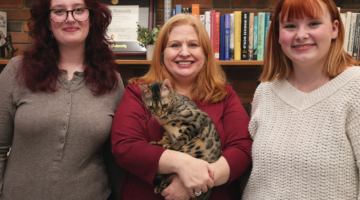
At Stephens College, studying animals means more than learning theories—it means working with animals starting in your first semester.
The Animal Behavior Program is designed for students who want more than lectures and textbooks. From day one, students explore how animals think, feel and interact with their environments, through a blend of classroom learning, observation, research and fieldwork. It’s a program built for people who know they want to work with animals and want to start right away.
Led by Dr. Jill Villarreal, Chair of the Animal Behavior and Psychology programs, the major combines scientific study with ethical and compassionate practice. Students begin working directly with animals in their first semester, developing the skills and confidence needed for careers in animal-focused fields.
“We’re really focused on giving students meaningful experiences early,” Villarreal said. “It’s not just about learning concepts; it’s about understanding how to apply them in real situations.”
Science, Ethics and Empathy
Animal behavior draws from biology, psychology, neuroscience and ecology. At Stephens, students study learning, communication, cognition, emotion and animal welfare.
“One of the things we think about is how animals think,” Villarreal explained. “We talk a lot about the rich emotional lives of many animals and how early experiences can have long-lasting effects.”
This perspective challenges students to move beyond surface-level observation and consider the deeper influences that shape behavior. It also prepares them to approach animals with empathy, scientific curiosity and ethical responsibility — qualities essential for careers centered on animal care, research and advocacy.
Hands-On Learning Starts Early
Few programs in the U.S. focus specifically on animal behavior, and even fewer offer hands-on learning from the first semester. Stephens’ block schedule—three focused hours together each day—allows students to go deeper, move easily between discussion and application, and work closely with faculty and peers.
“You can have all the textbook knowledge in the world,” Villarreal said, “but if you can’t apply it while interacting with animals or the public, it’s not as useful.”
Students Shaping their Experience
Freshman Nora Duffy knew she wanted a major where experience came first. “I needed a major where I could start having hands-on experiences right away, not just talk about them,” Duffy said.
After discovering Stephens during her college search, Duffy found a program that aligned with her academic goals and her personal values.
“It felt like the right place immediately,” Duffy said. “The program is very student-focused, and the professors really want us to succeed.”
As part of her coursework, Duffy balances lectures, guest speakers and applied learning, often all within the same week.
“I really enjoy the guest speakers,” she added. “We get to hear about so many different career paths within the same field, and it helps me see how many options there really are.”
Learning Beyond the Classroom
Students in the Animal Behavior Program also gain experience through partnerships and applied learning opportunities on campus as well as in the community. Duffy participated in a service dog training program through Retrieving Freedom, helping train a black lab named Nyla.
“Working with Nyla was amazing,” Duffy said. “Knowing that because of me, she’ll be able to become a service dog for someone who really needs it—it makes everything worth it.”
Freshman Molly Turnquist emphasized the impact of working with a range of species as part of her coursework.
“We’ve handled snakes, tarantulas, lizards, and worked with horses,” Turnquist said. “Getting that kind of hands-on experience helps you feel more confident and prepared.”
She also values how supportive and collaborative the learning environment is.
“You’re not just watching—you’re doing,” Turnquist said. “And if you have questions or want to explore something more, the faculty really encourages that.”
Preparing for Meaningful Careers
Graduates of the Animal Behavior Program are prepared for graduate study and careers in animal welfare, shelters, rescues, conservation organizations, research settings and industry.
“We want students to graduate with options,” Villarreal said. “They’re prepared for graduate school, but also for meaningful careers working with animals in many different settings.”
With plans for continued growth, including a future Center for Companion Animal Behavior, Stephens College is creating a space where curiosity turns into experience, experience builds confidence, and passion for animals becomes a meaningful career.